 Official Louisiana State Websites use .la.gov
  Secure .gov websites use HTTPS
| Surveillance Division Activity | Total Count |
|---|---|
| Compliance Inspections (CEIs) Conducted - All Media | 2737 |
| Incident/Complaint Investigations Conducted | 4543 |
| Water Quality Sites Sampled | 1594 |
Surveillance
The Surveillance Division of the Louisiana Department of Environmental Quality (LDEQ) operates statewide to safeguard Louisiana’s environment and support compliance with air, water, and hazardous waste regulations. With inspectors based in six regional offices across the state, the division is LDEQ’s largest, with more than 120 team members. As one of the agency’s primary “boots on the ground” groups, the Surveillance Division plays a key role in monitoring facilities, responding to environmental concerns, and ensuring that regulatory standards are met throughout Louisiana.
Our staff perform several key responsibilities:
-
Inspecting facilities to ensure they follow permits, regulations, and any enforcement requirements
-
Investigating incidents and complaints from citizens, partner agencies, and regulated facilities
-
Collecting environmental samples, including air, water, and waste, to support high-quality data and regulatory decisions
Surveillance staff also work closely with other state agencies and provide compliance assistance to small and medium-sized facilities to help them understand and follow environmental rules. We respond to citizen reports, upset/release notifications, and referrals from partner organizations.
As part of our statewide work, the Division conducts ambient surface water monitoring under the Clean Water Act. This monitoring provides essential data used to set and review water quality standards.
Surveillance Activities
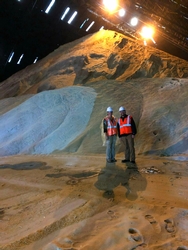
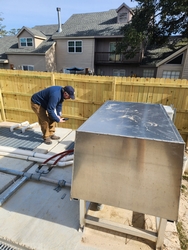
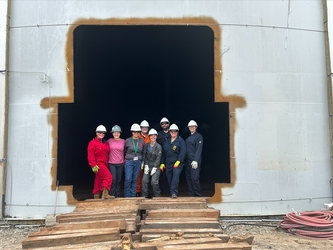
Inspections
Receiving a permit, license, registration, certification, or other acknowledgment from the Department of Environmental Quality (DEQ), is an avenue through which a facility becomes part of the LDEQ-regulated universe subject to inspection by the Surveillance Division. Permitted facilities are recognized as entities that must comply with environmental standards, and their inclusion ensures that DEQ can monitor and evaluate according to their permitted activities to help ensure protection of public health and the environment.
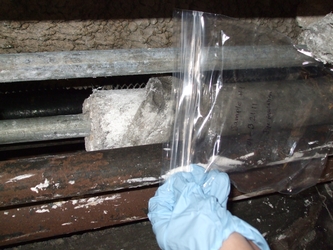
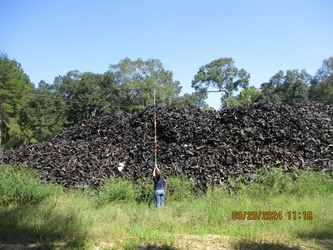
Toward this goal and strategy, the Surveillance Division is responsible for conducting inspections across a wide range of environmental media. These different media inspections include: air quality, solid waste, hazardous waste, surface water, asbestos, lead, and waste tires.
Inspections are carried out using a variety of compliance monitoring methods. These may include self-certified records and monitoring reports submitted by facilities, and on-site evaluations. Each method provides valuable information that helps inspectors assess whether a facility is operating within the limits of its permit, and any applicable laws and/or regulations.
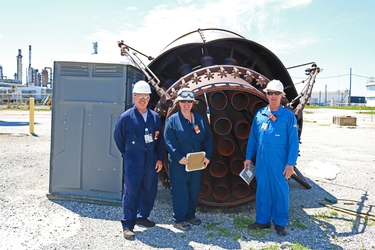
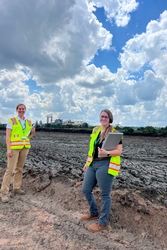
When the Surveillance Division conducts inspections, the inspector compares the facility’s operations to the conditions outlined in its permit to verify accuracy and adherence. They observe any pollution control equipment or systems that have been installed, review operational records, and interview facility representatives to gather statements about practices and procedures. Inspections also include on-site tours of the facility to directly assess operations and conditions. In addition, inspectors review any information or reports submitted to the Department to confirm consistency and compliance.
The frequency and scope of inspections are determined by several factors, including a facility’s compliance history, its location, the potential environmental impact of its operations, and any grant or funding commitments made by the department. A compliance monitoring strategy which accounts for these factors is completed and submitted to EPA on a yearly basis.
Facilities found to be out of compliance may be referred to other divisions, such as Enforcement, for further review and corrective action. By allocating resources strategically, the Division maximizes environmental protection and ensures that oversight remains effective across all regulated media.
Incidents
The Surveillance Division reviews non-emergency incidents and complaints that come through the agency’s Single Point of Contact (SPOC) system. Each incident/complaint is assigned to appropriate regional staff based on the described incident/complaint location and the type of environmental media involved. Emergency situations are handled separately by the Emergency Response Division.
Once an incident/complaint is assigned, inspectors review all the details and begin an on-site and/or off-site investigation, depending on the scope and impacts described. The goal of the investigation is to determine which environmental regulations apply and if there are compliance issues which need addressing.
Depending on the type of incident, and findings following the investigation, the resulting reports may be referred to other divisions such as Enforcement, Criminal Investigations or Audits, as needed.
Once finalized, a report is stored in LDEQ’s Electronic Document Management System (EDMS), where it is available to the public to support transparency and accountability.
Water Quality Assessments
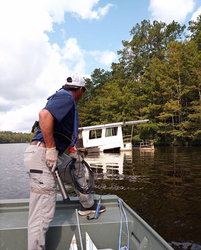
The Surveillance Division collects monthly ambient water quality samples from surface water area locations (within specific basins/subsegments), targeted across the state. To keep monitoring consistent, we follow a four-year rotating sampling plan. About one-quarter of the selected surface water subsegments are sampled each year, completing the full rotation over four years.
We also maintain long-term monitoring sites in 10 of the state’s 12 basins. These sites are sampled every year, giving us steady data that helps track long-term environmental and water quality trends.
As part of this plan, LDEQ completes a full review of the accessible subsegments listed in the applicable water quality regulations (Louisiana Administrative Code, Title 33) during each four-year cycle. This monitoring supports important environmental work, including water quality modeling, standards and assessments, and water permitting activities.
The data collected is also used by our Water Planning and Assessment Division to develop the impaired waterbody [303(d)] list, which identifies waters that do not meet state and federal water quality standards. This helps determine whether a waterbody is suitable for swimming, fishing, and other recreational uses, and guides future planning and restoration efforts that protect both the environment and public health.
During a sampling event, inspectors collect water samples for multiple parameters. Each sampling event requires multiple sample containers; samples are analyzed using both on-site (physical measuring instruments) and off-site (laboratory analysis methods) methods/techniques to derive results and determine whether water quality meets state and federal standards.
Yearly Surveillance Activities
Surveillance activities are counted and tracked based on a state fiscal year
(July 1 - June 30).
Program Technical Leads and Contacts
You may contact the staff scientist listed below based on their respective discipline or specialty area if you have questions or concerns related to regulations, applicability, or inspection requirements. While the inspector assigned to a specific case will always have the most detailed information about that inspection, these individuals serve as the technical leads for their programs within the Surveillance Division.
They ensure each program’s requirements align with the agency’s mission as well as federal and state guidelines. Their responsibilities include annual planning, tracking activities for grant and strategic plan goals, providing training to inspectors, and supporting consistency across the state through travel and statewide oversight. They have deep knowledge of the regulations within their discipline and assist with complex cases or issues that may arise.
Brian Fontenot, Environmental Scientist Senior
Discipline: Air
111 New Center Drive
Lafayette, LA 70508
Email: brian.fontenot@la.gov
Phone: 337-262-5577
Davina Witte, Environmental Scientist Senior
Discipline: Asbestos and Lead
990 North Corporate Drive, Suite 102
New Olreans, LA 70123
Email: davina.witte@la.gov
Phone: 504-736-7728
Karen Price, Environmental Scientist Senior
Discipline: Solid Waste
602 North Fifth Street
Baton Rouge, LA 70802
Email: karen.price2@la.gov
Phone: 225-219-3612
Jimbo Earles, Environmental Scientist Senior
Discipline: Hazardous Waste
2800 South MacArthur Drive
Alexandria, LA 71301
Email: jimbo.earles@la.gov
Phone: 318-487-5657
Shane Miller, Environmental Scientist Senior
Discipline: Water
111 New Center Drive
Lafayette, LA 70508
Email: shane.miller2@la.gov
Phone: 337-262-5586
Jeffrey Leonick, Environmental Scientist Senior
Discipline: Water
990 North Corporate Drive, Suite 102
New Orleans, LA 70123
Email: jeffrey.leonick@la.gov
Phone: 504-736-7717
April Baiamonte, Environmental Scientist Senior
Discipline: Policy and Planning
990 North Corporate Drive, Suite 102
New Orleans, LA 70123
Email: april.baiamonte@la.gov
Phone: 504-736-7731
Sandy Coon, Environmental Scientist Senior
Discipline: Laboratory Contracts and LEADMS
602 North Fifth Street
Baton Rouge, LA 70802
Email: sandy.coon@la.gov
Phone: 225-219-3614