 Official Louisiana State Websites use .la.gov
  Secure .gov websites use HTTPS
Underground Storage Tank Forms, Applications, and Guidance Documents
Welcome to the Underground Storage Tank (UST) Application and Forms Page. Here you will find everything you need to successfully complete environmental applications and meet regulatory requirements. The pages within this section include registration applications, official guidance documents, common FAQs, and required forms to help you navigate the UST process with confidence.
In addition, this resource hub provides notifications with important information about modifying UST status. Whether you are registering new tanks, submitting changes to current UST systems, seeking clarification on compliance rules, or submitting a UST notice, these materials are designed to make the process clear, efficient, and accurate.
UST Registrations and Certified Worker Applications
Our resource list provides official information designed to help regulated entities complete required forms and notifications with confidence. The guidance documents explain requirements step‑by‑step, offer tips, and clarify common questions.
Why Use These Guidance Documents?
- Clear Instructions – Break down complex environmental regulations into easy‑to‑follow steps.
- Application Support – Provide examples and explanations to help you complete forms correctly.
- Time Saver – Reduce mistakes and avoid delays in the approval process.
- Trusted Source – All documents are approved by the state environmental agency.
UST Notice of Installation Upgrade Renovation Form UST-ENF-04
UST owners and/or certified workers are required to notfiy LDEQ for approval prior to starting UST installation, renovation, or repair using this form.
UST Notice of Intent to Perform Closure or Change-In-Service UST-SURV-01
UST owners and/or certified workers are required to submit this notification form 30 days prior to permanent closure or change-in-service of a UST for approval.
UST Closure Assessment Form UST-SUR-02
UST owners or certified workers must complete and submit to LDEQ for approval within sixty (60) days after UST system closure or change-in-service
More Info
UST Closure Assessment Form
Release Detection Forms
These forms are used when conducting varies interstitial monitoring or liquid/vapor monitoring for tank and/or piping release detection.
More Info
Piping Interstitial Monitoring Records Form for Monthly Visual Sump Inspections
More Info
Piping Interstitial Monitoring Records Form for Recording Interstitial Monitoring Sensor Results
More Info
Tank Interstitial Monitoring Records Form for Recording Interstitial Monitoring Results
More Info
Release Detection Device Monitoring Vapor Recordkeeping Form
More Info
Release Detection Device Monitoring Liquid Recordkeeping Form
More Info
Cert. of Compliance: Use for Automated Interstitial Monitoring of Emergency Power Generator UST
Cathodic Protection Testing Forms
These forms are used when conducting varies cathodic protection testing.
LDEQ Monthly and Annual Periodic Op and Maintenance Walkthrough Inspection Checklist
These forms can be used to conducted the required monthly and annual walkthrough inspections.
It is not a requirment to use this form.
More Info
Adobe Version
More Info
Word Version
More Info
PEI RP900: UST Inspection and Maintenance (2017 Edition) Document and Walkthrough Inspection Checklists
Alternative Fuel Form
This form is used do determine and document UST system compatibility with biofuels containing more than 10 percent ethanol or more than 20 percent biodiesel.
UST System Equipment Testing/Inspection Form
Approved Alternative Testing Methods and Forms
More Info
LDEQ UST Containment Sump Integrity Verification Under High Water Table Conditions Procedure
More Info
LDEQ UST Containment Sump Integrity Verification Under High Water Table Conditions Form
More Info
LDEQ UST Containment Sump Low Liquid Level Hydrostatic Test Procedure
More Info
LDEQ UST Containment Sump Low Liquid Level Hydrostatic Test Form
More Info
Dri-sump Containment Tightness Testing Method
More Info
Dri-sump Containment Tightness Testing Method Evaluation
Site Diagram Template
A template available for UST to submit system site diagram.
More Info
Site Diagram Template
Remediation Forms*
Conveyance Notice Forms
Complete when filing conveyance notice is required to close a remediation site
More Info
Conveyance Notice Form
More Info
Conveyance Notice format for Industrial Soils and GW2 Zone
RECAP Input Parameter Form
Form is required to be submitted to LDEQ for all eligible Motor Fuels Underground Storage Tank Trust Fund Sites
More Info
RECAP Input Parameter Form
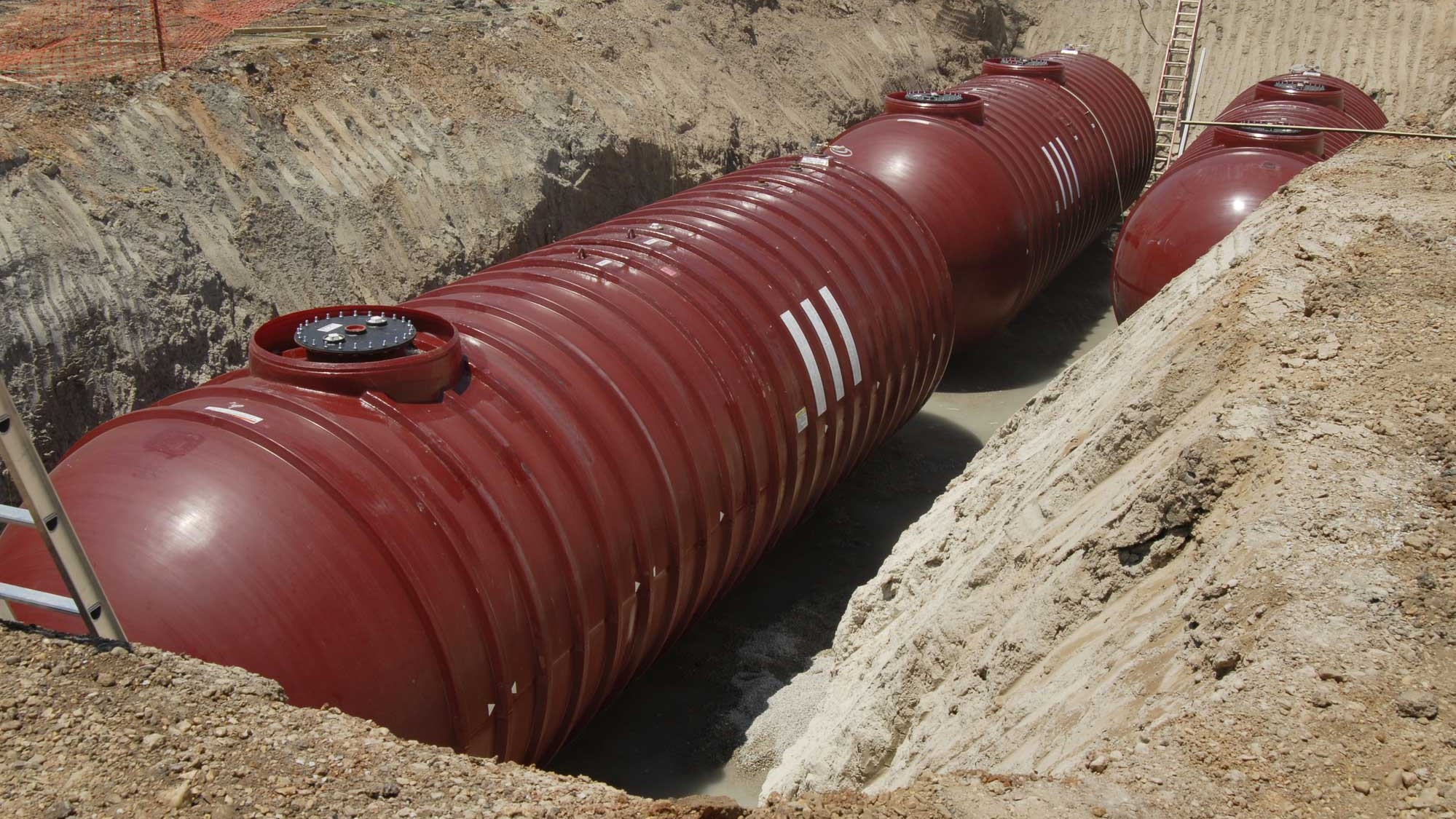
A UST or underground storage tank is defined as any one or combination of tanks (including underground pipes connected thereto) that are used to contain an accumulation of "regulated substances," and the volume of which (including connected underground piping) is 10% or more beneath the surface of the ground. The term underground storage tank does not refer to any of the following tanks nor does it refer to any pipes connected to any of these tanks:
- farm or residential USTs (1,100-gallon capacity or less) storing motor fuel for noncommercial purposes
- USTs storing heating oil for consumptive use on the premises where stored
- septic tanks
- pipeline facilities (including gathering lines) regulated under the Natural Gas Pipeline Safety Act of 1968, or Hazardous Liquid Pipeline Safety Act of 1979, or which is an intrastate facility regulated by the state
- surface impoundments, pits, ponds, or lagoons
- storm-water or wastewater collection systems
- flow-through process tanks
- liquid traps or associated gathering lines directly related to oil or gas production and gathering operations
- tanks situated in an underground area (such as basement, cellar, mineworking, drift, shaft, or tunnel), if the tanks are situated upon or above the surface of the floor
The following UST systems are excluded from the requirements of the regulations that apply to underground storage tank systems:
- any UST system holding hazardous wastes listed or identified in the DEQ’s Hazardous Waste Regulations, or a mixture of such waste and other regulated substances
- any tank that is part of a wastewater treatment facility regulated under Section 402 or 307(b) of the Clean Water Act
- equipment or machinery containing regulated substances for operational purposes such as hydraulic lift tanks and electrical equipment tanks
- any UST system with a capacity of 110 gallons or less
- any UST system that has never contained more than a de minimis concentration of regulated substances
- any emergency spill or overflow containment UST system that is expeditiously emptied after use
- wastewater treatment tanks systems
- any UST system storing radioactive materials regulated under the Atomic Energy Act of 1954 (42 U.S.C. 2011 et. seq)
- any UST system that is part of an emergency generator system at nuclear power generation facilities regulated by the Nuclear Regulatory Commission under 10 CFR 50, Appendix A
- airport hydrant fuel distribution systems
- UST systems with field-constructed tanks
- any UST System that stores fuel solely for use by emergency power generators are exempt from release detection requirements (emergency power generator tanks need to be registered and must meet all UST requirements except release detection) if installed prior to 8/20/09. Emergency power generator tanks and piping installed after 12/20/08 and before 8/20/09 are required to be secondarily contained, but are still exempt from release detection. Emergency power generator tanks and piping installed after 8/20/09 are required to be secondarily contained and are required to have interstitial monitoring release detection.
Once the water has been removed from the tank hold, it cannot be discharged back into the tank hold. Here are some options to properly dispose of the removed tank hold water:
-
Discharge the water via LDEQ General Permit. Click here to obtain permit information for tanks, tank beds, new tanks and excavations.
-
Discharge the water to a Public Owner Treatment Works (POTW) that has agreed to take it.
-
Dispose of the water at a commercial Wastewater Treatment facility.
-
Recycle the water at a used oil recycling facility for its fuel content.
All owners of new and existing UST systems are required to register his/her system with the LDEQ. It is also the responsibility of the owner of the system to maintain current and accurate information with the Department. Maintaining current and accurate information with the department includes notifying the department of changes in ownership or of changes in the UST system descriptions resulting from system upgrades. Any owner who knowingly fails to register or submits false information shall be subject to a civil penalty. An owner is defined as the following:
- the current owner of the land under which the tank is or was buried
- any legal owner of the tank
- any known operator of the tank
- any lessee
- any lessor
Each tank must be properly designed and constructed, and any portion that routinely contains product must be protected from corrosion in accordance with Louisiana law. Please refer to Table 1.
TABLE 1
| Tank Material | Acceptable Corrosion Protection |
|---|---|
| Fiberglass Reinforced Plastic | No corrosion protection is necessary |
| Metal with Cathodic Protection |
Dielectric coating
OR
Field-installed cathodic protection system designed by a corrosion expert
OR
Impressed current system
OR
Cathodic protection system
|
| Composite (Steel with Fiberglass Reinforced Plastic) |
No corrosion protection is necessary |
| Metal without Corrosion Protection | Corrosion expert has determined no leak will occur due to corrosion |
| Other | Must be approved by the department |
Temporary Closure is defined in LAC 33:XI.103.Definitions as “the temporary removal from service of a UST.” So anytime you take a UST system out of service, LDEQ considers this tank to be in temporary closure.
LAC 33:XI.903 allows underground storage tanks that have been upgraded with corrosion protection to remain in temporary closure indefinitely provided that all regulatory requirements are met. Continuous operation and maintenance of corrosion protection equipment on all metal components must be maintained. In addition, monthly release detection must be maintained for tanks that contain more than one inch of product (LAC 33:XI.903.A).
For example, for a STI-P3 tank, the anodes need testing every three years (LAC 33:XI.503). For a steel tank with an impressed current system, the impressed current system must remain on, be tested every three years, and the rectifier inspected every 60 days to ensure that the equipment is running properly (LAC 33:XI.503). Also, all other metal components (piping, metal flexible hoses, and submersible turbine pump components) that are in contact with soil or water need continuous corrosion protection while in temporary closure.
When a UST system is temporarily closed for three months or more, the vent lines must be open and functioning, all lines, pumps, man ways, and ancillary equipment must be capped and secured, and an updated Registration form (UST-REG-01) must be submitted to LDEQ indicating the date the tanks were temporarily closed (LAC 33:XI.903.B).
USTs systems that have been temporarily closed for three months are more that are brought back into service must have tightness testing performed within five (5) days returning into service (LAC 33:XI.903.E).
UST systems that have not been upgraded with corrosion protection must be permanently closed after being in temporary closure for more than six months (LAC 33:XI.903.C).
For UST systems that have been upgraded with corrosion protection and have been in temporary closure for more than 24 months, LAC 33:XI.903.D requires UST owners or operators to perform a site assessment in accordance with LAC 33:XI.907. The reference to LAC 33:XI.907 requires the sampling locations of the site assessment to be consistent with the UST closure-in-place site assessment sampling requirements.
The 24-month site assessment is only required one time as long as the UST system remains empty of product. If the tanks are never returned into commerce and are permanently closed at a later date, then the 24-month site assessment sampling can be used as permanent closure sampling as long as the tanks have remained empty during temporary closure. Additional permanent closure samples could be required if any contamination discovered during permanent closure was not identified during the temporary closure site assessment. Please coordinate performance of the 24-month temporary closure assessment with the appropriate LDEQ Regional Office.
If the internal inspection method chosen is the KWA Method (video camera), then soil testing is required. The video camera is used to assess the integrity of the internal liner. The soil testing is used to determine how long it will take the steel tank exterior to corrode given the specific soil conditions at your site.
If an internal inspection of the tank lining is conducted using the NLPA 631 Method (physical entry into the tank), then no soil sampling is required. The internal lining is assessed physically by the inspector that enters the tank. The tank metal thickness is determined by ultrasonic testing from inside the tank.
When converting an existing UST system for use with any alternative fuel, UST Owners and Operators are responsible for the following:
1) Determine UST system compatibility (LAC 33:XI.505.A). Determine that the UST system is compatible with the material that is going to be stored in the UST system. The following equipment, components, and materials must be compatible with the regulated substance stored in the UST system:
a. Tank
b. Internal tank lining
c. Piping material
d. Pipe adhesives and glues
e. Flexible connectors, fittings
f. Fill pipe and drop tube
g. Spill and overfill prevention equipment
h. Submersible pump, all submersible pump components
i. All gaskets, bushings, couplings
j. Line leak detectors
k. Leak detection equipment (ATG probes, floats, sensors)
l. Dispensers
m. Dispenser filters
n. Hoses (including breakaway couplings and fittings)
o. Nozzles
p. Spill containment sumps
LAC 33:XI.505.A requires UST owners and operators to use a UST system made of or lined with materials that are compatible with the substance stored in the UST system.
Although LDEQ regulations do not have specific recordkeeping or reporting requirements dealing with UST system compatibility, UST owners and operators should compile and maintain UST system compatibility records in the event that a release from the UST system occurs. If LDEQ determines that a release of a regulated substance occurs as a result of incompatibility, an enforcement action (order and/or penalty) is possible.
2) Follow recommended practices for storage and handling (LAC 33:XI.505.B). Follow the recommended practices outlined in API Recommended Practice 1626, “Storing and Handling Ethanol and Gasoline-Ethanol Blends at Distribution Terminals and Service Stations” for proper storage and handling of ethanol-gasoline blends.
LAC 33:XI.505.B requires UST owners and operators storing alcohol blends to do so in accordance with LAC 33:XI.501.A (Follow the guidelines in API Recommended Practice 1626, “Storing and Handling Ethanol and Gasoline-Ethanol Blends at Distribution Terminals and Service Stations”).
API 1626, Section 3.2, provides an example of an acceptable method of converting an existing UST system storing other products to storing ethanol blends. Conversion documents are available on the internet from many different sources (web links below), and are also available from most fuel suppliers.
The conversion steps listed below are present in most conversion documents and should be followed:
a. Determine and ensure UST system compatibility
b. Inspect entire system for water intrusion
c. Clean tank of all water and sediment
d. Replace all dispenser filters with appropriate filters
e. Determine and ensure dispenser equipment compatibility
f. Calibrate dispensing and leak detection equipment
g. Properly label all dispensers and fill ports
h. Inspect system regularly for leaks and/or water intrusion
3) Update registration information (LAC 33:XI.301.A.3 and 301.B). Update UST-REG-01 form to reflect the change in the regulated substance stored in the UST system.
LAC 33:XI.301.B and LAC 33:XI.301.A.3 requires UST owners and operators to update the Registration Form UST-REG-01 for all UST system changes. This includes the type of regulated substance stored in the UST system.
An automatic tank gauge (ATG) or statistical inventory reconciliation (SIR) can be used for the annual tank tightness testing requirement of the Louisiana Alternative Assessment Procedure as long as the annual ATG or SIR test meets a 0.1gph leak rate with a probability of detection of at least 95% and a probability of false alarm of less than 5%, and the manufacturers’ instructions and/or third party certification are followed for the tests. The tank tightness testing required before installation of the impressed current system and 3 to 6 months after installation of the impressed current system must be conducted using a precision volumetric or non-volumetric tank tightness test method (not ATG or SIR ) that follows the manufacturers’ instructions and/or third party certification. All tank tightness testing methods (precision tank tightness test, ATG, or SIR) must be capable of detecting a 0.1 gallon per hour leak rate from any portion of the tank that routinely contains product. For example, if a precision volumetric tank tightness test is conducted at a 20% product level, but the tank routinely contains product at the 50% level, the tank tightness test will not be valid because it did not test the area of the tank between the 20% and 50% product levels.
Third-party certifications can be located by accessing the NEIWPCC Vendor list with this link.
Emergency Power Generator Underground Storage Tank System
Emergency power generator UST systems in Louisiana must have met release detection requirements as follows:
- UST systems installed before August 9, 2009 must have begun using a form of release detection before September 20, 2021.
- UST systems installed on or after August 9, 2009 must have met the secondary containment with interstitial monitoring requirements at installation.
EPA has finalized and published new guidance and resources on emergency power generator UST systems on June 3, 2022. The following documents, as described by EPA below, are now available on the EPA OUST website:
- Federal UST Requirements for Emergency Power Generator UST Systems: https://www.epa.gov/system/files/documents/2022-05/epg-ust-system-requirements.pdf
- This booklet summarizes the full gamut of federal UST requirements for EPGs - installation, reporting, spill and overfill prevention, corrosion protection, release detection, walkthrough inspections, compatibility, operator training, repairs, financial responsibility, release response, and closure.
- This also covers Spill Prevention Control and Countermeasures (SPCC) related regulatory requirements specific to emergency power generator UST systems.
- Owner and Operator Introduction: Automated Interstitial Monitoring Systems for Underground Pressurized Piping on EPG UST Systems: https://www.epa.gov/system/files/documents/2022-05/aim-systems-owner-operator-intro.pdf
- This document describes a new option for EPG UST system owners and operators to use interstitial monitoring to meet the line leak detector requirement of the federal UST regulation. EPA has determined this option, termed “automated interstitial monitoring (AIM) system,” may be used to meet the dual release detection requirements for pressurized piping systems at EPG UST systems. This document provides basic information and introduces EPG UST system owners and operators to AIM systems.
- The document also contains forms and checklists to assist with verifying AIM system compliance with UST implementing agencies and for complying with periodic testing requirements for AIM systems. AIM systems are optional, and UST implementing agency requirements may differ. UST system owners and operators should contact their UST implementing agency to determine whether they allows the use of an AIM system, and whether the forms and checklists meet the agency’s documentation requirements.
- In Indian Country, where the federal UST regulation applies and AIM systems are allowable, UST owners and operators should submit forms to the applicable EPA regional office.
- In-Depth Discussion: Automated Interstitial Monitoring Systems for Underground Pressurized Piping on Emergency Power Generator UST Systems: https://www.epa.gov/system/files/documents/2022-05/aim-systems-in-depth-discussion.pdf
- This document contains a more complete discussion about AIM systems (the introduction document does not address all issues). This includes background and technical information on the EPA’s recognition of using automated interstitial monitoring systems to meet federal release detection requirements for underground pressurized piping systems on EPG UST systems.
- This document can also assist UST system installers, fuel system designers, and other qualified professionals when installing or modifying fuel storage systems to meet federal UST regulatory requirements for underground pressurized piping systems.
- Fillable PDFs for Certification of Compliance and Periodic Testing and Inspections of AIM Systems: https://www.epa.gov/ust/certification-inspections-and-testing-forms-automated-interstitial-monitoring-systems
- These PDFs are fillable versions of the Certification of Compliance Forms and AIM Systems Inspection and Testing Checklists (these are the forms contained in both AIM documents above).
In addition to these new documents, a reminder that EPA previously provided responses to questions on several important issues regarding EPG UST systems. EPA made these responses available to the public in our UST Technical Compendium about the 2015 Federal UST Regulations under the subject Emergency Power Generators: https://www.epa.gov/ust/underground-storage-tank-ust-technical-compendium-about-2015-ust-regulation. Q&A topics include:
- Determining if emergency power generator systems must comply with federal UST regulation.
- Release detection requirements for piping operating at atmospheric pressure.
- Complying with National Fire Protection Association 110 to meet the federal UST regulation.
- Visual-based assessments for above ground tanks (e.g. day tanks) that are part of EPG UST systems.
LDEQ UST Division accepts Automated Interstitial Monitoring (AIM) as a valid form of pressurized piping release detection and recognizes that it meets the line leak detector release detection requirements only for emergency power generator UST systems.
The Certificate of Compliance form must be completed and signed by either an LDEQ-certified worker, a licensed professional engineer, or a licensed professional geoscientist. The form must be maintained by the facility and made available for review by the department. The form is not required to be submitted to LDEQ in order to use AIM as a release detection method.
Only an individual certified in UST installation and repair may exercise supervisory control over the installation of a new UST system.
*All documents linked on this page are considered archived documents and not ADA compliant, but the information is current and valid.